Tag: rome museum

  • Vatican Museums

    Vatican Museums


    [tab name=”Information”]

    Vatican Museums

    It started out as just a small collection of sculptures of Pope Clement XIV and Pope Pius VI in the years 1769-1799. They decided to call attention to culture and let the public take part in viewing the collections of art. Their names where dedicated to the first building in the Vatican Museum compound; the Pio-Clemente museum. Today, the Vatican Museum is considered one of the most important Museums in the world featuring one of the utmost art collections! Throughout the decades other Popes added different pieces of art and the collections started to grow further! There are 54 galleries in total!

    What can you see in the Vatican Museums?

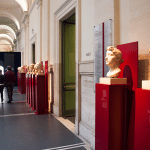
    The Vatican Museums are made up of many smaller museums, each one different from the other. Today, around 13 museums inside the Vatican Palace are open to the public. Walking through the rooms of the museum you should look above and observe the decorated ceilings which are absolutely stunning! Your visit here will be an unforgettable experience!

    One of the highlights is the Sistine Chapel

    Many people believe that the entrance to the Sistine Chapel is from St. Peter’s Square. Well, it’s not! The Sistine Chapel is part of the Vatican Museums. The only thing you can see from St. Peter’s square is the roof of the Sistine Chapel. You can observe the black or white smoke coming out of the stove pipe during the papal elections. The stove pipe is then removed after the Bishops are finished with the conclave and a new Pope has been elected! You don’t need another ticket to visit the Sistine Chapel. You’ll be able to visit it towards the end of the tour through the museum. When walking in, raise your head and observe Michelangelo’s paintings and altar frescoes! Not only the arts of Michelangelo can be admired but those of Rosselli, Botticelli and Perugino!

    Some other fantastic pieces of art and frescoes to admire are the Raphaello Rooms;

    While Michelangelo was painting the Sistine Chapel, Raphael and his workshop were painting the suite apartments of Pope Julius II with important scenes from Christian history. They are called the four Stanze di Raffaello (Raffaello’s rooms).

    Then we have the Vatican Museum Hall of Maps;

    The Gallery of Maps contains a series of painted topographical maps of Italy based on drawings by the cosmographer Italian priest Danti.  In 1580 Pope Gregory XIII commissioned Danti to decorate the walls of the Vatican and it took him 3 whole years to finish the 40 panels of the gallery. Keep in mind, everything you see has only been painted on! It’s definitely a stunning fact and a breathtaking view!

    One of my favorite art piece is the famous Spiral Staircase;

    The Vatican Museums bronze spiral staircase which was designed by Giuseppe Momo in 1932 and charged by Pope Pius XI is one of the most beautiful staircases in the world!  The stairs are two separate helixes, one leading up and the other leading down, that twist together in a double helix formation. The stairs themselves are wide and have a small amount of climb so that horses would have been able to walk them up!

    Of course there is much more to see and the above are only a few examples of the whole complex!

    Opening hours:  Every day from Monday to Saturday from 9.00AM – 6.00PM (4.00PM is the last entrance time) Please note that the Museum must be left 30 minutes prior to closure.

    Closed: On Sundays (except on the every last Sunday of the month: free entrance is permitted from 9.00AM – 1.30PM and they close at 2.00PM – not valid during the Easter period, on the 29th of June, on the 25th or 26th of December).

    The Vatican Museum will stay closed: 1st and 6th of January, 11th of February, the Easter period, the 1st of May, the 29th of June, the 14th and 15th of August, 1st November and the 25th and 26th of December.

    SPECIAL! Should you wish to see any special room/sections of the Vatikan Museums, you can ask and it might happen!

    Info for disabled people: There is no line-up or entrance fee. Just go directly to the main entrance and show your ID. Wheelschairs can be booked in advance.

    Where to buy tickets:

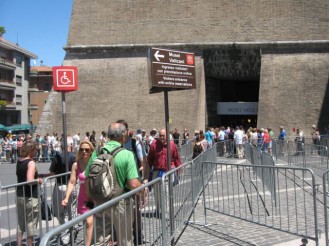
    You can buy entry tickets on line for euro 4.00 more or go directly to the Museum entrance and stand on line. This ticket does not include a tour.

    For more Info: +39 06 69884676 – First you’ll have automatic responses, then if you wish you can talk to an operator.

    No discount tickets are available.

    Should you want a guided tour you can find many tours on line!

    How much do the tickets cost?

    The tickets to the museum cost euro 16.00/person for adults. Reduced tickets cost euro 8.00/person. You can get them at the entrance of the Museum the day you visit.

    Free admission to the Vatican Museums

    Every last Sunday of the month you can enter the Vatican Museums for free from 9.00 AM – 2.00 PM. Last entrance is 12.30 PM. On the 27th of September (World Tourism Day) you’ll have free admission as well! Should one of the following dates fall on a Sunday, another rule will be applied: Easter Sunday,  29th of June and 25th or 26th of December. Be prepared for a long line up!

    Tipp: Book your tickets on-line and save yourself a lot of time! You can also book guided tours through the Vatican Museums.

    When is it best to visit?

    If you visit the Vatican Museum in the afternoon or on a Wednesday, it should be better.

    The most crowded days are Mondays, Saturdays and the last Sunday of the month (because of the free entrance on the last Sunday of every month regulation).

    How to get to the Vatican Museum?

    Metro: Line A – stops: Ottaviano-S.Pietro-Musei Vaticani; Cipro – then 10 minutes by foot

    Bus: Nr. 49 stops right in front of the Museums;  Nr. 32, 81, 982 to Piazza del Risorgimento – then 5 minutes by foot; Nr. 492, 990, Via Leone IV / Via degli Scipioni – then 5 minutes by foot

    Tram Nr. 19 Piazza del Risorgimento – then 5 minutes by foot

    Tip: In Via Santamaura – you will find this Street when walking down the steps next to the Vatican Museum on the other side of the Street – you can find an Internet point and you’ll also be able to make international phone calls and/or print something!

    [/tab]

    [tab name=”Maps”][map id=”87″][/tab][tab name=”Near Attractions”]The Vatican Museum is inside Vatican City. If you walk down the hill along the Vatican walls you will hit Saint Peter’s square which is right in front of Saint Peter’s Basilica. If you walk further down towards the Tiber River, you will see Castel Sant’Angelo and the bridge Ponte Sant’Angelo. 


    [/tab]

    [end_tabset]


  • Vittorio Emmanuel II Monument Rome

    Vittorio Emmanuel II Monument Rome

    [tab name=”Description”]

    Vittorio Emmanuel II Monument Rome

    Vittorio Emmanuel II Monument is a massive building made of white marble situated at the point where Piazza Venezia meets the Capitoline Hill.


    This monument was built to honor Victor Emmanuel II, the first king of a unified Italy. Giuseppe Sacconi designed Vittorio Emmanuel II Monument in 1895. It was inaugurated in 1911 and completed in 1925. They built this monument with pure white marble from Botticino, the province of Brescia.


    This imposing and beautiful landmark has been a controversial building since the beginning of construction for a few reasons. Many people said it was too white and way too big. They were also angry because construction destroyed a large area of the Capitoline Hill. Many locals have dubbed the Vittorio Emmanuel II Monument as the wedding cake and the Victorian typewriter.


    It features majestic stairways, tall Corinthian columns and fountains. In the middle of the two sets of steps to the monument is an equestrian statue of Victor Emmanuel. Two fountains that represent the Tyrrhenian Sea are on either side of the monument. At the top of the monument are two quadrigas representing Liberty and Unity.


    Please know that sitting on the steps at the entrance is forbidden. There is a guard that will blow his whistle if you attempt to take a seat.
    An eternal flame guarded by soldiers burns on this front terrace to mark the grave of an unknown soldier from WW I. There are two soldiers standing here 24/7, holding a lance in the hand and wearing a black beret.


    Inside the Vittorio Emmanuel II Monument there is a free museum. The museum is dedicated to the World War I. In the middle of the room, is the gun carriage used in 1921 for transporting the remains of the Unknown solder. Outside the museum is a terrace and café with wonderful views of Rome. There is free access to the terrace.

    However there is glass elevator at the back of the Vittorio Emmanuel II Monument. This takes you to the very top. It’s a superb opportunity to embrace and take some photos of the Eternal City. When I was visiting there was quite a line for the elevator. There is a seven Euro charge, but I consider it well worth it for a one-time visit. You can also take the stairs all the way up, but I don’t recommend that option unless you are in fantastic shape.

    Behind the monument are the Roman Forum and the Coliseum. In front of it is Via Corso, which in turn has the Trevi Fountain and The Spanish Steps to the right. The Vatican and Piazza Novona are to the left. Church of Santa Maria in Aracoelli is situated up against this monument. Upon exiting the Vittorio Emmanuel II Monument you can go into the church with the high staircase next to the Capitoline Museum, without climbing the steps.

    [/tab]

    [tab name=”Maps”] [map id=”142″] [/tab]

    [tab name=”Information”]

    Phone number: +39 06 678 0664

    Address: Piazza Venezia, 00186 Rome, Italy

    Hours: Monday through Friday, 9:30 am – 5:30 pm

    Saturday and Sunday, Closed[/tab][tab name=”Nearby Attractions”]Via del Corso, Piazza Venezia, Le Domus Romane di Palazzo Valetini

    Further down the road you’ll find the Colosseum[/tab][end_tabset]

  • Capitoline Museums Rome

    Capitoline Museums Rome

    [tab name=”Description”]

    Capitoline Museums Rome

    Capitoline Museums is easy walking distance from the Colosseum. It is situated in front of Rome’s present-day City Hall, very close to the Roman Forum and the Victor Emmanuel monument.

    Capitoline Museums is one of the oldest museums in the world. It’s an astonishing place when you can easily spend several hours reflecting on impressive sculptures, paintings and mosaics from imperial Roman times.

    The history of the museums goes back to Pope Sixtus IV. In 1471 he donated a collection of important ancient bronzes that had great symbolic value to the city of Rome.

    Pope Clement XII had it open to the public in 1734, making them the first museums in the world open to the public.

    These two Renaissance buildings face each other on a majestic square. None other than Michelangelo himself designed it in 1536. It was completed over a period of more than 400 years.

    In the courtyard you will see the huge head, hand & foot of Constantine. A statue of a mounted rider in the middle of the piazza is of Emperor Marcus Aurelius. That one is the replica, the authentic statue is inside.

    Many sensational paintings can be seen here. There are Veronese, Tintoretto, Caravaggio and Van Dyck and many more. My favorite two are Caravaggio’s Fortune Teller and John the Baptist.

    I was also overwhelmed by the beauty and grandeur of the many sculptures on display.

    Capitoline Wolf with Romulus and Remus is one my favorite pieces of art in the Capitoline Museums. I also love Spinario (boy extracting a thorn out of his foot), Bernini’s Medusa and the Dying Gaul the sad image of a warrior who is dying.

    Don’t forget to see the room with the 65 busts of the Roman emperors. The one of Marcus Aurelius is something I never tire of seeing.

    To get from one wing to the other do not go exit the building. You have to take the underground passage linking the two buildings. Down in the tunnel contains some burial headstones and signs that give you an insight into Roman lives. My favorite was the gravestones of a chariot racer. There is a cafe on site as well; it has good value lunches and coffee.  The view of the city from this cafe is breathtaking.

    You have to drop off your bags at the locker room before you enter. The fee for storage is 1 euro, but is refunded when you return the key.

    You can take photos without a flash in some parts of the Capitoline Museums but not in special exhibits. There is a lot to see and I would plan to allow 3 – 4 hours to actually look around.[/tab]

    [tab name=”Maps”] [map id=”123″] [/tab]
    [tab name=”Information”]

    Phone number: +39 06 0608

    Address: Piazza del Campidoglio, 1, 00186 Rome, Italy

    Hours: Monday Closed

    Tuesday through Sunday, 9:00 am – 8:00 pm

    Last admission 1 hour before closing time.[/tab][end_tabset]


  • Galleria Borghese Rome

    Galleria Borghese Rome

    [tab name=”Description”]

    Galleria Borghese Rome

    Galleria Borghese houses many exquisite items that are set in elegantly decorated rooms in the one-time home of the Borghese family. It consists of twenty rooms across two floors. Between 1613 and 1615, Architect Flaminio Ponzio built the Villa Borghese for the Cardinal Scipione Borghese the nephew of Pope Paul V.

    Walking into the entrance hall you will see with beautiful 4th-century floor mosaics of fighting gladiators. Look up and see Mariano Rossi’s brilliant fresco of Jupiter shining down on Romulus and Remus, the Capitoline Geese, the River Tiber, the Tiburtine Sibyl and others.

    The main floor is mostly dedicated to intricate Roman floor mosaics, classical antiques of the 1st and 3rd centuries AD and classical and neo-classical sculptures. The other spaces are devoted to European Renaissance paintings. The paintings in Galleria Borghese are just breathtaking. It has some of the best including some by Caravaggio, Botticelli and Raphael and many others.

    My favorite has to be Raphael’s painting. The Deposition also known as The Entombment, tells the story of the final days of Jesus Christ. I was very moved by the people carrying Christ. The Virgin Mary is also there, as she is being held after seeming to have fainted.

    The sculptures are incredible, they will absolutely blow you away. I can’t believe they were made from marble.

    Galleria Borghese Rome has many sculptures displayed here. My two favorite sculptures of Bernini are here. Apollo and Daphne. Where Daphne is turning into a tree before your very eyes, as Apollo is about to catch her and have his way with her. The other one is David with the Slingshot. David is stretching his sling as he eyes up Goliath. They are some of the most realistic depictions of the human form I’ve ever seen. Everything from the muscles to the look on his face is perfectly carved in marble.

    I found a lot of amazing pieces here at Galleria Borghese. From sculptures to paintings and the most gorgeous ceiling frescoes I have ever seen in my life. Please note your visit is limited to two hours. Get there early so you can get your tickets and check your bags. Make sure you see the artwork you really want to see in the beginning and then work your way around.

    When leaving, be sure to take a stroll through the adjacent park. The Borghese Park is a chanting spot for a walk as it is a very compelling park with a lot of history. At the end of the park there is a grand view overlooking Piazza Popolo.[/tab]

    [tab name=”Maps”] [map id=”136″] [/tab]

    [tab name=”Information”]

    Phone number: +39 06 32810

    Address: Piazzale del Museo Borghese 5, 00197 Rome, Italy

    Hours: Monday Closed

    Tuesday through Sunday from 8:30 a.m. to 7:30 p.m.

    Tours start every two hours and reservations are required.

    The ticket office closes at 6:30 p.m.

    Access up to half hour before the closing time.

    No photos allowed.

    There is a storage room where you are required to leave your belongings. (handbags, camera, umbrella, stroller, etc) Sorry no luggage.

    There is a café in the cellar that serves very good food and coffee.

    You need to show your ticket if you want to use the bathrooms.

    Book in advance. Reservations are a must. Print your confirmation and take it with you.

    Arrive early. There is likely to be a line at the ticket desk and the baggage check desk.

    Transportation:

    Bus No.: 5, 19, 52, 53, 63, 86, 88, 92, 95, 116, 204, 217, 231, 360, 490, 491, 495, 630, 910, 926

    Metro Line A: Spagna (you can follow the signs to Villa Borghese – Via Veneto)[/tab][tab name=”Nearby Attractions”] Galleria Borghese is right inside Villa Borghese park. The Bioparco di Roma (zoo) is inside the Villa Borghese park as well. Piazza del Popolo and Church Santa Maria del Popolo is a just a short walk away.

    If you walk through the Villa Borghese Park you’ll hit Via Veneto and the Roman walls. From there you can see other nearby attractions to Via Veneto.

    [/tab][end_tabset]


  • Castel Sant Angelo Rome

    Castel Sant Angelo Rome

    [tab name=”Description”]

    Castel Sant Angelo Rome

    Castel Sant Angelo Angelo was originally built as a mausoleum for Hadrian and his family in about 139 AD. Other Roman emperors were also buried here. Such as Marcus Aurelius, Antoninus Pius, Publius Septimius Geta, Lucius Verus and Faustina the Younger.

    Castel Sant Angelo was later modified in the Middle Ages and used as a castle. It was also a prison and as a refuge for the popes. This massive fortress has some marvelously decorated apartments built into the structure by various popes they used in times of war.

    Castel Sant Angelo Rome is situated perfectly near the Tiber River. It is a mere stone throw from St Peter’s Square and Basilica. The pedestrian bridge that leads to the castle is magnificent. It is lined with glorious statues of Bernini angels.

    Castel Sant Angelo has many levels all worth seeing. I especially loved the papal residential areas. There is some interesting history and magnificent architecture inside this building. Don’t expect to see a lot of beautiful paintings or sculptures inside Castel Sant’ Angelo. You will see some dark extensive dungeons they used for military prison. There are old treasure chests where the Vatican used to store their valuables. You can see secret escape passages the popes used to escape when the Vatican was under attack. The room of armour shows a lot of recreating battle experience. The castle is very well preserved, so you can walk around and see a lot. Be prepared to climb up long spiral ramps and stairs.  I will say it could be a bit strenuous. The brochure does say an elevator is available upon request.

    As you climb to the different levels in the castle the views from the battlements are astonishing. You should take some time to walk the lower battlements if you admire late pre-gunpowder castles.

    While you are walking through the corridors and tunnels, you can listen to the audio narrative. It will explain the use of the rooms and the experiences of those who either lived or were imprisoned there.

    The bronze statue of Saint Michael the Archangel at the top is beautiful. According to history, Michael miraculously stopped the severe plague that had infested the city of Rome. They say Michael emerged on top of the fortress sheathing his sword as a sign of the end of the plague of 590.

    On the way up there is a nice café just above the central courtyard for a snack and drinks. Another attraction is the magnificent view. The view from the top is breathtaking. You can see the stunning, panoramic view of Rome. You will be able to see the Vatican and St Peter’s basilica from here.

    I recommend going to Castel Sant Angelo in the evening as to enjoy the beautiful sunset and night views of Rome.

    [/tab]

    [tab name=”Maps”] [map id=”132″] [/tab]

    [tab name=”Information”]

    Phone number: +39 06 681 9111

    Address: Lungotevere Castello, 50, 00186 Rome, Italy

    Hours: Monday Closed

    Tuesday through Sunday, 9:00 am – 7:30 pm

    There is a ticket office on the right immediately after entering the entrance.

    [/tab][tab name=”Near Attractions”]Castel Sant’Angelo is attached to the bridge Ponte Sant’Angelo. If you stay on that side of the Tiber River and turn your head while standing in front of the Sant’Angelo castle, you will view Saint Peter’s Basilica and Saint Peter’s square in the distance. If you walk along the Vatican walls you will reach the Vatican Museum.

    [/tab]

    [end_tabset]

  • Le Domus Romane di Palazzo Valentini

    Le Domus Romane di Palazzo Valentini

    [tab name=”Description”]

    Le Domus Romane di Palazzo Valentini

    Palazzo Valentini

    It’s rather complicated to find Le Domus Romane di Palazzo Valentini. However if you go left from where Del Corso meets Piazza Venezia and look for a yellow story building with a door that looks to be a solid brick fortress with a coat of arms hanging on top.

    I just want start off by saying Le Domus Romane is not your average museum. It is situated underneath a government building. These are underground excavations of patrician “Domus” or wealthy roman home. The experience is very unique way to visualize through great graphics how Roman homes were like. Great use of new technology to bring ancient history to life and the multi-media presentation is well done.

    Plexiglass floors enable you to peer down inside the house. I have to warn you in the beginning it can be a little dizzying, however you should get used to it quickly. Through the wonders of modern technology, a light show fills in what’s missing from this ancient excavated home.

    There are various types of rooms that will allow you to see different artifacts.  You can see it all come back to life decorated with mosaics, wall paintings and paved floors.

    I particularly liked the incredible presentation at the end about Trajan’s Column. It shows a virtual reconstruction of the column and describes what each of the scenes carved into the marble represents.

    The tour at Le Domus Romane di Palazzo Valentini exceeded my expectations. It has to be one of the best attractions I have experienced. I really think it is worth fitting into your trip. The tour is about 1.5 hours and was really a great value. Please note there is No walk INS allowed. Remember to book in advance. Numbers for the tour are limited so you must book in advance.[/tab]

    [tab name=”Maps”] [map id=”126″] [/tab]

    [tab name=”Information”]

    Phone number: +39 06 32810

    Address: Via IV Novembre 119/A, 00187, Rome, Italy

    Hours: Wednesday through Monday – 9:30 am to 5:30

    Tuesday – Closed

    You can’t take photos inside.

    There is a gift shop where you can purchase souvenirs.[/tab][tab name=”Nearby Attractions”]Via del Corso, Vittorio Emmanuel II Monument, Via del Corso, Piazza Venezia [/tab][end_tabset]


  • Planetarium and Astronomical Museum Rome

    Planetarium and Astronomical Museum Rome

    [tab name=”Description”]

    Planetarium and Astronomical Museum Rome

    The Planetarium and Astronomical Museum Rome was established in 1928 and then was closed down in 1980 because unfortunately they needed the building for something else. A new Planetarium in another building was opened in May 2004, in Rome’s Eur district after more than 20 years of waiting!

    The Planetarium was established within the buildings of the Museum of Roman Culture where kids and adults can learn more about the history of the Roman Empire and walk around observing ancient ruins and reconstructions of building the way they used to be! Also, you’ll see the reconstruction of the Ancient Rome at the time of the Emperor Adriano.

    Next to the Planetarium, an Astronomical Museum was developed with models, planetary dioramas and multimedia stations, which integrate the cultural and educational aspect of the planetarium. Let’s say that the two structures complement each other. Since the Planetarium’s opening it has continuously engaged in educational activities and increased its efforts to diffuse scientific and astronomical culture to all their visitors!

    You will be seated in a comfortable armchair looking up on a dome cum screen, watching a magical show which is accompanied by smoothing background music. There is also a book shop inside which you can visit after you toured! [/tab]

    [tab name=”Maps”] [map id=”48″] [/tab]
    [tab name=”Information”]

    Phone number: +39 060608

    Address: Piazza G. Agnelli, 10, 00144, Rome, Italy

    How to get there:

    Autobus : 30, 170, 671, 714, 764, 765, 767, 791

    Metro: B Line- Eur Fermi stop

    The tickets cost Euro 8.50 for adults and Euro 4.50 for children age 6-8 and over 65. Kids under 6 are free of charge.

    For exhibitions and special events free telephone reservations are requested! The number you can call is 0039 060608 every day from 9.00AM to 9.00PM. The free reservations will automatically be cancelled 15 minutes before the shows start. They have more shows to choose from so it’s probably better to have a look at their internet site before you go. The recommended visiting time for the Planetarium is 2-3 hours. I would say that you should keep in mind that this attraction is interesting for children!

    [/tab][end_tabset]


  • Explora Childrens Museum Rome

    Explora Childrens Museum Rome

    [tab name=”Description”]

    Explora Childrens Museum Rome

    Explora Childrens Museum Rome is a 2000 square meter huge pavilion situated on two floors, with interactive exhibits and workshops, which allow children to try out facts, reality and the usual everyday things to do, with their very own little hands. The tours at Explora are self-guided. Your kids can decide what they want to play with and when they want to move on to the next activity. Explora has a limited number of admissions to avoid overcrowding and to ensure everyone a quality visit! Calculate a visiting time of around 2 hours. The tickets can be bought on-line and so you can just walk in without having to stand on line. This is recommendable especially on the weekends when it gets crowded or when the weather gets bad!

    The Explora Childrens Museum Rome is split up in different sections; science, environment, communication, society, economy and new technologies! For example kids have a kitchen at their disposal where they can touch and play with different foods. On the weekends, for an extra Euro 10.00 fee, Explora organizes special cooking classes for kids while the parents can observe the happenings in the kitchen from behind a glass window! This class is for 5 year olds and up.

    Outside the Explora they have a green area with games! Before you leave, take a glimpse in their bookshop… maybe you’ll find an interesting souvenir to take back home with you! If you’re a little hungry, visit their café and restaurant!

    Once you enter the Explora Childrens Museum Rome you should pass by at the information desk straight away and make reservations for the daily workshops they offer. Check the calendar to be informed about the scheduled workshops so your kids can choose what they’d like to do the most!

    [/tab]

    [tab name=”Maps”][map id=”47″][/tab]

    [tab name=”Information”]

    Phone: +39 06 361 3776

    Address: Via Flaminia, 80/86, 00196 Roma, Italy

    Hours: Monday   Closed
    Tuesday through Sunday; 10:00 a.m to 5:00 p.m[/tab][end_tabset]

  • National Roman Museum

    National Roman Museum

    [tab name=”Description”]

    National Roman Museum

    National Roman Museum is located near the Church of Santa Maria degli Angeli and the Baths of Diocletian. The Italian Government transformed the palace into a museum in 1981.

    National Roman Museumis has four floors of beautiful artwork. There is some impressive sarcophagus. I couldn’t keep my eyes of the unbelievable Portonaccio sarcophagus, it left me awe struck. It might be the only exhibit in National Roman Museum to have its own space. There is special lighting and they have an exclusive seating area to appreciate this work.

    The Bronze ornaments of the ancient Nemi Ships during Caligula’s reigns are spectacular. The wolves, lions and panthers look so alive and real. It is so impressive there is no damage after centuries of being underwater.

    The entire floor on Mosaics will make you marvel how people had the patience to put together such intricate, varicolored and mind-blowing art.

    Wait until you visit the room that holds the frescoes from the Villa of Livia (wife of Augustus). It is an absolutely must see!  I also thought the frescos from the Villa of Farnesina were amzing. It had many rooms in different color schemes. The yellow bedroom, the green room, and others were displayed magnificently. It will give you a feeling of what it must have looked like when it was in the villa. Remember to read the signage outside of the room for the history behind the wonderful garden themed frescoes.

    National Roman Museum collection of Roman sculpture is second to none. Two floors of breathtakingly beautiful classical marbles and bronzes. The Terme Ruler, the Boxer of Quirinal, and the bronzes from Nemi, the Anzio Girl. The Discus thrower is spectacular as well as the sleeping Hermaphrodite. The marble sculptor of the Crouching Aphrodite with an array of other stunning marble portraits of emperors, philosophers and important women will bring you face to face with history.

    Don’t forget to see the history of coinage in the basement. You will enter through bank vault doors and view a fantastic coin collection charting the development of the Roman Empire. It is a treat for anybody interested in the history of currency. There is also a small but very nice assortment of jewelry in the basement.

    National Roman Museum is fabulous. There is so much to see, you could spend all day walking around. The artwork is well displayed. It doesn’t get crowded like elsewhere, so you can enjoy it all in peace.[/tab]

    [tab name=”Maps”] [map id=”149″] [/tab]

    [tab name=”Information”]

    Phone number: +39 06 3996 7700

    Address: Museo Nazionale Romano, Rome, 00185 Italy

    Hours: Monday Closed

    Tuesday through Sunday 9:00 am – 7:45 pm

    The location is also extremely easy to reach being right across from Termini Station.

    The best thing is that if you buy a ticket for one branch, your ticket is good for the other three for a three day period (4 if one of those days is a Monday). National Museum of Rome, Palazzo Altemps, Crypta Balbi, and Baths of Diocletian.[/tab][tab name=”Nearby Attractions”] Piazza della Repubblica, Termini train station, Via Nazionale, Church of Saint Mary of the Angels and Martyrs is very close to the National Roman Museum. Basilica di Santa Maria Maggiore is also in that area, even though it’s a little further away than the other mentioned attractions.

    [/tab][end_tabset]